Kinesthetic Multiplication: Hands-On Learning & Interactive Tools
Are you a parent or teacher with an energetic child who just can't sit still to learn multiplication? Do traditional flashcards and rote memorization methods fall flat, leading to frustration for everyone involved? You're alone. Many children are kinesthetic learners, meaning they understand and retain information best when they engage their bodies through movement and touch.
This guide will explore how to transform multiplication practice from a chore into an exciting, hands-on adventure. We will share practical activities that cater to active minds and demonstrate how digital resources can complement these methods. By the end, you'll see how our interactive tools at MultiplicationChart.cc can become a powerful partner in this dynamic learning journey.
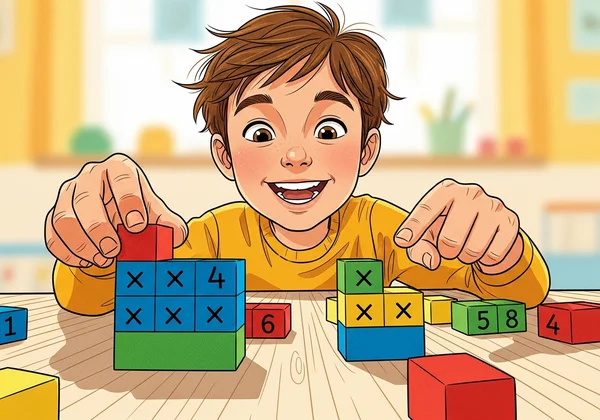
Understanding Kinesthetic Learners: Why Movement Fuels Math Mastery
Before diving into activities, it’s helpful to understand why a hands-on approach works so well. Many kids struggle with abstract numbers. Kinesthetic learning makes math tangible. It bridges the gap by turning math into a physical experience.
What is Kinesthetic Learning in the Context of Math?
Kinesthetic learning, simply put, is learning by doing. In mathematics, it means moving beyond just seeing and hearing concepts. It involves using the body and sense of touch to explore numerical relationships. Instead of just memorizing that 3 x 4 = 12, a kinesthetic learner might build three groups of four blocks to feel and see the result.
This method connects abstract mathematical ideas to concrete physical actions. It helps children build a deeper, more intuitive understanding of what multiplication truly represents—repeated addition—rather than just a list of facts to be memorized.
The Benefits of Hands-On Multiplication Games for Active Minds
Incorporating movement and touch into math practice offers significant advantages, especially for children who find it hard to focus while sitting still. The benefits of hands-on multiplication games are clear and impactful:
- Improved Memory Retention: When a physical action is linked to a math fact (like jumping on a number), it creates a stronger neural pathway. This "muscle memory" makes recall faster and more automatic.
- Deeper Conceptual Understanding: Building arrays with blocks or stepping out equations helps children visualize and internalize the core principles of multiplication, moving them from memorization to genuine comprehension.
- Increased Engagement and Motivation: Hands-on games feel more like play than work. This fun factor reduces math anxiety and boosts a child’s willingness to practice, turning potential power struggles into positive learning experiences.
- Reduced Boredom and Fidgeting: For active learners, sitting still can be a major hurdle. Allowing them to move channels their energy productively, helping them focus on the task at hand instead of fighting the urge to fidget.
Engaging Kinesthetic Multiplication Activities for Home and Classroom
Ready to get moving? Here are a few simple yet powerful kinesthetic multiplication activities that you can easily adapt for home or the classroom. These require minimal setup but deliver maximum engagement.
"Jump the Times Tables": Active Movement Games for Memorization
This activity is perfect for burning off energy while reinforcing math facts.
How to Play:
- Use chalk to draw a large number grid on a sidewalk or use paper plates indoors to lay out numbers 1 through 20 (or higher).
- Call out a multiplication problem, like "2 x 6!"
- The child's task is to jump to the correct answer—in this case, the number 12.
You can turn this into a game by timing them, having siblings compete, or calling out facts in a sequence to create a "hopscotch" path. This game blends movement and quick thinking. Kids burn energy while mastering math facts.
Building Number Patterns: Using Blocks and Manipulatives
Using physical objects is a cornerstone of hands-on learning. LEGO bricks, counting cubes, or even simple items like buttons or dried beans work perfectly.
How to Do It:
- Present a multiplication problem, such as 4 x 5.
- Ask the child to build it. They can create four groups with five blocks in each.
- Have them count the total number of blocks to find the answer: 20.
This activity makes the concept of an "array" tangible. The child can physically touch and rearrange the groups, helping them understand that 4 x 5 is the same as 5 x 4 (the commutative property) in a very concrete way.
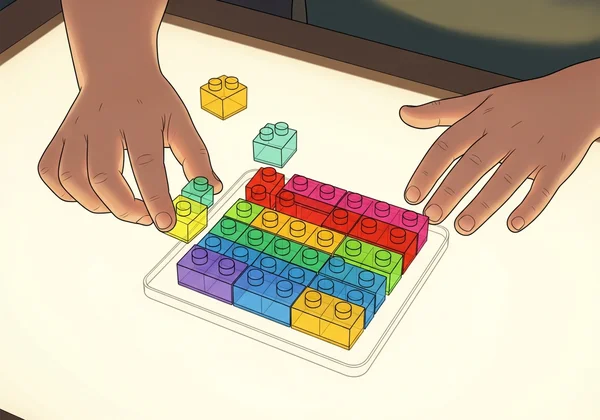
Tactile Tracing & Sensory Play: Making Numbers Feel Real
Engaging the sense of touch can be a quiet yet powerful way to learn. This is especially helpful for children who benefit from sensory input.
How to Do It:
- Fill a shallow tray with sand, salt, or shaving cream.
- Call out a multiplication equation (e.g., "7 x 3 = 21").
- Have the child write the full equation in the sensory tray with their finger.
The physical sensation of tracing the numbers and symbols helps solidify them in the child’s mind. You can also use sandpaper numbers or textured craft materials to create multiplication flashcards that they can touch and feel.
Powering Hands-On Practice with Our Interactive Online Tools
Physical activities are fantastic for building foundational understanding, but repetition and pattern recognition are key to achieving mastery. This is where a well-designed digital tool can perfectly complement your hands-on efforts, bridging the gap between movement and fluency.
Visualizing Patterns with MultiplicationChart.cc's Interactive Color Features
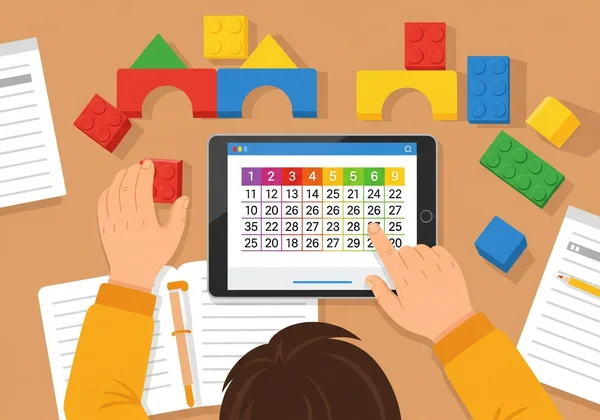
After jumping or building, keep the momentum going with our interactive chart. A child who has physically grouped objects to solve the 3s times table can then go to the chart and use the color-highlighting feature to mark all the answers (3, 6, 9, 12...).
This simple action transforms the chart from a static grid into a dynamic canvas for discovery. They can instantly see the diagonal pattern of the 3s, reinforcing their hands-on work with a clear visual confirmation. You can explore these patterns right now on our interactive multiplication table.

Printable Multiplication Charts: Your Offline Kinesthetic Companion
We understand that learning shouldn't be limited to a screen. That's why our platform offers a gallery of free printable multiplication charts. These charts serve as an excellent offline tool for more hands-on practice.
You can use a blank chart for a tactile game: have your child place a small object (like a bead or a button) on the correct square after solving a problem. Or, cut a completed chart into puzzle pieces for them to reassemble. This continues the kinesthetic experience and helps them become more familiar with the grid's structure. Download a free multiplication chart to use in your next activity.
From Movement to Mastery: Daily Practice with Digital Drills
Daily practice is key—try quick drills with our interactive chart to build fluency! Our platform makes this daily work quick, engaging, and stress-free. Instead of tedious quizzing, your child can simply hover their mouse over any square on the chart. The full equation and answer immediately appear, providing instant feedback without the pressure of a formal test.
This feature allows them to self-correct and explore at their own pace. It’s a low-stakes way to review facts learned during physical activities, solidifying their knowledge with powerful digital drills until it becomes second nature.
Unlock Multiplication Mastery Through Movement & Interaction
Helping a kinesthetic learner master multiplication doesn't have to be a struggle. By embracing their natural need to move, you can make learning more effective, engaging, and fun. The key is to build a strong foundation with physical activities and then reinforce that knowledge with smart, interactive tools.
Pairing hands-on games with our online chart gives your child the best of both worlds—active fun and focused practice. When you tap into your child’s love of movement, math becomes a game they’ll want to play again and again.
Ready to turn multiplication into a fun, active adventure? Visit MultiplicationChart.cc today to explore our free interactive chart and download printable resources to get started.
Frequently Asked Questions About Kinesthetic Multiplication
What is kinesthetic learning in math, and how does it help with multiplication?
Kinesthetic learning in math is the process of learning through physical action and touch. It helps with multiplication by connecting abstract concepts to concrete experiences, which improves memory, deepens understanding, and keeps active learners engaged in the material.
How can I effectively use a multiplication chart with hands-on activities?
You can use a printable multiplication chart as a game board, having your child place a marker on the answer after a physical activity. Alternatively, use our interactive online chart to visually confirm patterns they discovered while building with blocks or to quickly check answers from a movement-based game.
Are there any fun, free multiplication games suitable for active learners?
Yes, absolutely! Activities like "Jump the Times Tables," where kids jump to the correct answer on a floor grid, are fantastic. Additionally, our free online multiplication tools make practice feel like a game, with instant feedback and colorful visuals that keep kids engaged.
What are the easiest ways to help my child learn multiplication through movement?
Start simple. Try clapping or stomping to the rhythm of a times table (e.g., "2, 4, 6, 8..."). Use building blocks to create multiplication arrays, or download one of our PDF guides for more ideas. The goal is to make the connection between movement and math facts.