Interactive Multiplication Charts vs. Apps: Best Learning Tool for Kids
In today's digital world, parents and teachers face overwhelming choices when helping children master multiplication. Should you use a flashy math learning app or stick with a classic multiplication chart? This crucial decision impacts not only your child's math foundation but also their learning habits and screen time. Many discover that gamified apps promise quick results but can lead to shallow understanding, while simple charts are often dismissed as outdated, their true potential overlooked.
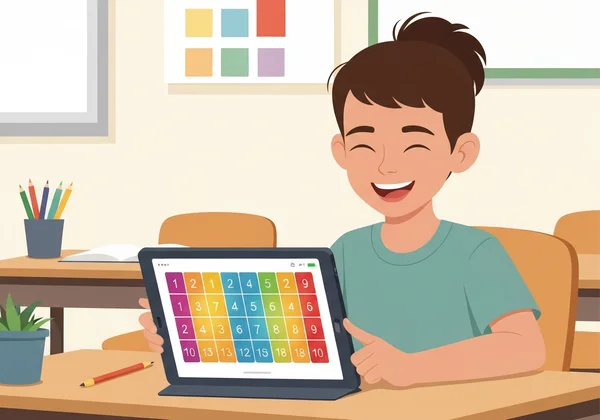
Let's break down how these two learning tools stack up, so you can choose what's best for your child. We'll examine how modern, interactive multiplication charts compare to popular math apps across key factors like learning effectiveness, cost, engagement, and overall educational value. We believe that the right tool makes all the difference, and a great place to start is with a tool that is both effective and fun. You can explore our chart to see how simple and powerful it can be.
Understanding Multiplication Charts: The Timeless Learning Tool
Multiplication charts are more than just a grid of numbers; they are a visual map of mathematical relationships. For generations, they have been a trusted resource in classrooms and homes, helping students build a strong foundation in arithmetic. Their power lies in their simplicity and their ability to reveal the underlying structure of multiplication.
Evolution from Paper to Interactive Digital Charts
The traditional paper multiplication chart is a fantastic resource. However, its modern counterpart—the interactive digital chart—takes learning to a new level. Unlike a static page, an interactive grid responds to your movements. When you hover over a number, the corresponding row and column light up. The equation and answer then appear instantly. This immediate feedback transforms a passive activity into an engaging exploration. At MultiplicationChart.cc, we've combined the reliability of the traditional chart with the power of interactivity, creating a free tool that is both intuitive and fun.
The Educational Psychology Behind Visual Learning in Mathematics
Many children are visual learners, meaning they understand and retain information best when it is presented graphically. A multiplication chart is a perfect example of a visual learning tool. It organizes numbers in a logical grid, allowing children to see patterns they might miss with rote memorization alone. For instance, they can visually identify square numbers along the diagonal or see the commutative property (e.g., 3 x 5 is the same as 5 x 3) by finding the same product at two different spots on the grid. This visual discovery builds a deeper, more conceptual understanding of math.
Accessibility and Inclusivity Benefits of Multiplication Charts
A major advantage of multiplication charts is their accessibility. A high-quality online tool should be available to everyone, regardless of their financial situation or location. Unlike many apps that require subscriptions, a tool like the one on our site is completely free and requires no registration. Printable versions extend learning beyond the screen. Children can continue practicing offline. This ensures all students have access to quality educational resources. This inclusivity makes the interactive multiplication table a fair and equitable resource for classrooms and families worldwide.
Math Learning Apps: Engaging or Distracting?
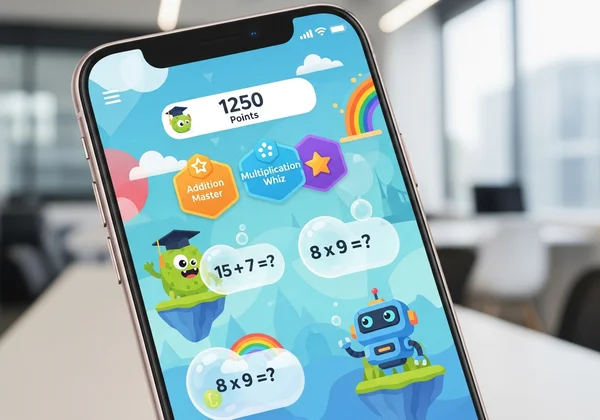
Math learning apps have flooded the market, promising to make learning fun through games, rewards, and colorful characters. They can be a powerful supplement for practicing math facts and offer an element of excitement that appeals to many children. However, it's essential for parents and educators to look beyond the initial allure and consider the potential downsides.
The Allure of Gamification in Math Education
Gamification—the use of game-like elements such as points, badges, and leaderboards—is the primary draw of most math apps. It can be highly motivating, encouraging children to practice their times tables repeatedly to earn rewards or beat their high scores. For short bursts of practice, this can be an effective way to keep a child engaged. The instant feedback and sense of accomplishment can make an otherwise tedious task feel like play.
Common Pitfalls of Over-Reliance on Math Apps
Despite their benefits, over-reliance on apps can have drawbacks. Many are designed to be fast-paced, prioritizing quick answers over deep understanding. Children may learn to tap the correct number without grasping the underlying mathematical concept. Many "free" apps are filled with distractions. Constant notifications, ads, and purchase prompts pull children's attention away from learning. This can create a desire for constant stimulation rather than focused study.
Hidden Costs and Subscription Models
While many apps advertise themselves as "free," their best features are often locked behind a paywall. These "freemium" models can lead to frustrating experiences for children and unexpected costs for parents. Subscription fees can add up quickly, especially for families with multiple children. This contrasts sharply with genuinely free resources designed purely for educational support, like our free multiplication chart, which provides full functionality without any hidden costs.
Head-to-Head Comparison: Charts vs. Apps
When choosing the best learning tool for kids, it's helpful to compare interactive multiplication charts and math apps directly. Let’s break down the differences across four critical areas to help you decide what's right for your child.
Learning Effectiveness: Which Builds Stronger Math Foundations?
Math apps are often excellent for speed and recall. However, interactive charts excel at building foundational understanding. By allowing children to explore the grid, color-code patterns, and see the relationships between numbers, charts encourage curiosity and conceptual learning. This method helps children understand why 7 x 8 = 56, rather than just memorizing the fact. For long-term mathematical fluency, a strong foundation is far more valuable than quick recall alone.
Cost Comparison: Free vs. Freemium Math Learning Options
This is one of the most significant differences. The vast majority of high-quality math apps operate on a subscription or freemium model. In contrast, tools like MultiplicationChart.cc are completely free. There are no ads, no paywalls, and no subscription fees. This makes the interactive chart an economically superior and more accessible option for parents, teachers, and schools with limited budgets.
Engagement and Motivation: Sustained vs. Instant Gratification
Apps often rely on instant gratification—points, sounds, and animations—to keep kids engaged. This can be effective in the short term but may not foster sustained, intrinsic motivation. An interactive chart fosters a quieter, more focused form of engagement. The "aha!" moments come from discovering a new pattern or finally understanding a difficult times table. This type of discovery-based learning can build a child's confidence and genuine interest in math itself.
Screen Time and Developmental Considerations
Parents are rightfully concerned about the quality of their children's screen time. Many apps are designed to be "sticky," keeping users engaged for as long as possible with stimulating features. An educational tool like an online multiplication tool is different. It is a focused, distraction-free environment designed for a specific learning task. Once the learning is done, the child can easily move on. Plus, the ability to print the chart for offline practice offers a healthy balance between digital and analog learning.
When to Choose Multiplication Charts Over Apps
While both tools have their place, there are specific situations where an interactive multiplication chart is the superior choice. Understanding these scenarios can help you provide the most effective support for a young learner.
For Building Foundational Math Understanding
If your primary goal is to help a child understand the core concepts of multiplication, a chart is unbeatable. It provides the visual context that is often missing from fast-paced games. It allows for a slower, more deliberate exploration of mathematical properties like commutativity, distribution, and number patterns. This foundation is essential for success in more advanced math topics.
When Working with Multiple Children or Classroom Settings
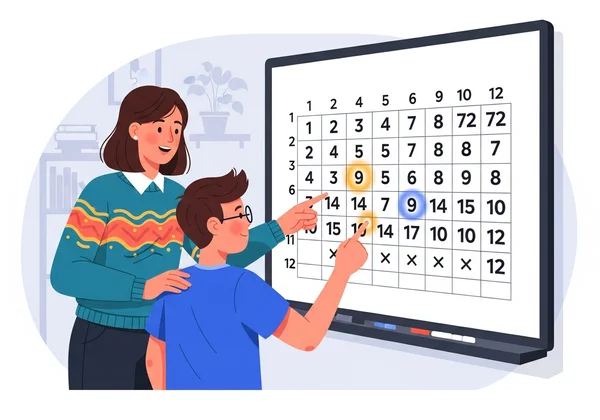
In a classroom or a home with multiple children, an interactive multiplication chart is an incredibly versatile tool. A teacher can project it onto a smartboard for whole-class instruction, demonstrating patterns for everyone to see. Parents can use the same free tool for children of different ages without needing multiple app subscriptions. The printable versions also make it easy to create customized practice sheets for an entire class.
For Children Easily Distracted by Gamification
Some children thrive on gamification, but for others, it can be a significant distraction. If a child is easily overstimulated or tends to focus more on the game's rewards than the math problems, a simpler tool is often more effective. A clean, ad-free interactive chart like the one on our site provides a calm, focused environment where learning can happen without interruption. Try our free tool to see the difference a distraction-free interface makes.
When Math Apps Complement Charts Perfectly
A balanced approach is often the best. Dismissing math apps entirely would mean missing out on some valuable opportunities for practice and reinforcement. The key is to use them strategically as a complement to the foundational learning provided by a multiplication chart.
Using Apps for Practice and Reinforcement
Once a child has used an interactive chart to understand a new set of multiplication facts (like the 7s table), a math app can be a great way to practice. Fast-paced drills and games can help solidify memory and improve recall speed. Think of the chart as the "learning" tool and the "practice" tool.
Addressing Different Learning Modalities
Every child learns differently. While a chart is ideal for visual learners, an app with auditory cues and kinesthetic (touch-based) interaction can appeal to other learning styles. Using both tools ensures that you are engaging multiple senses, which can reinforce learning and make it more durable.
Making the Most of Both Worlds: A Hybrid Approach
The most effective strategy is often a hybrid one. Start with the interactive multiplication chart to introduce concepts and explore patterns. Once your child feels comfortable, use a reputable math app for fun, timed drills. Finally, use a printable blank chart to test their knowledge away from any screens. This balanced method leverages the strengths of each tool to create a comprehensive and effective learning experience.
Making the Best Choice for Your Child's Math Journey
When it comes to multiplication learning tools, there's no one-size-fits-all solution. The right choice depends on your child's learning stage and needs. While apps offer engaging practice, they often fall short in building the deep, conceptual understanding that is crucial for long-term success in mathematics.
An interactive multiplication chart provides a powerful, visual, and distraction-free environment for discovery-based learning. It lays a strong foundation by helping children see the patterns and logic behind the numbers. Best of all, world-class interactive charts don't have to come with a subscription fee. They can be completely free and accessible to all.
For a tool that is effective, engaging, and 100% free, we invite you to explore the interactive resources on our site. Give your child the gift of a strong mathematical foundation.
Start learning with our chart today!**
Frequently Asked Questions About Multiplication Learning Tools
At what age should my child start using multiplication charts?
Most children are introduced to multiplication concepts in second or third grade, typically between the ages of 7 and 9. This is a great time to introduce a multiplication chart. Start by using it to explore simple tables, like the 2s, 5s, and 10s, to build their confidence.
Can multiplication charts really compete with engaging app games?
Yes, especially when they are interactive. While an app's engagement comes from external rewards, an interactive chart's engagement comes from the joy of discovery. When a child uses our interactive multiplication table to find a pattern on their own, it creates a powerful sense of accomplishment that is more lasting than winning points in a game.
How much screen time is appropriate for math learning apps?
Most child development experts recommend limiting screen time and focusing on quality over quantity. For educational apps, short, focused sessions of 15-20 minutes are often more effective than longer periods. It's also important to balance digital learning with offline activities, such as using printable worksheets.
Are there any free math apps that don't use disruptive advertising?
Finding high-quality, completely free apps without ads or in-app purchases is very difficult. This is a major advantage of web-based tools like ours. We are committed to providing a 100% free, ad-free learning environment because we believe education should be accessible to everyone without distractions.
What's the best way to transition from multiplication charts to mental math?
A multiplication chart is the perfect bridge to mental math. After your child becomes comfortable finding answers on the chart, start covering up sections and asking them to recall the facts. Use printable blank charts for practice. Over time, their reliance on the visual aid will decrease as their ability to recall facts from memory increases.