Adapting Multiplication Charts for Every Learning Pace
Every child's journey with multiplication is unique. Some grasp patterns instantly, while others need more time and visual support. As a parent who's navigated this journey with my own child, I've learned that multiplication mastery isn't a race—every child's brain processes numbers in its own unique way. So, how can you support every student, regardless of their natural pace?
This guide shows you how to leverage interactive multiplication charts to support both quick learners and those who need a gentler approach. By using adaptable tools, you can ensure no student gets left behind in their mathematical journey. With the right resources, like our free interactive chart, you can turn a one-size-fits-all lesson into a personalized and engaging experience for everyone.
Customizing for Different Learning Speeds
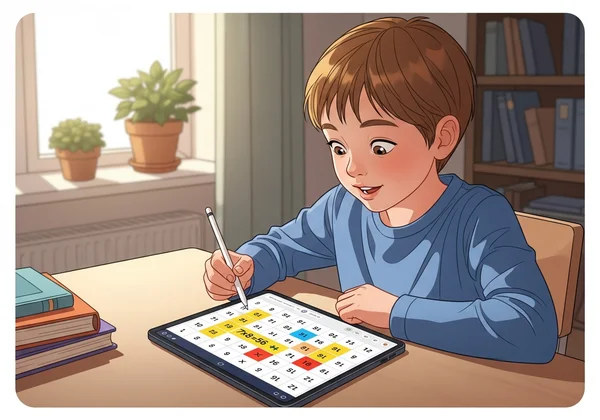
The key to successful multiplication learning is personalization. A standard, static times table chart treats every learner the same. But we know that's not how children actually learn. Some students feel bored if the pace is too slow, while others feel anxious if it's too fast. A flexible approach allows you to meet each child where they are.
By using adaptable tools, you can adjust the difficulty and focus of the lesson. This helps build a positive and effective learning environment. Whether a child is racing ahead or needs a little more encouragement, a customizable multiplication chart is the perfect companion for their journey.
Visual Strategies for Quick Learners
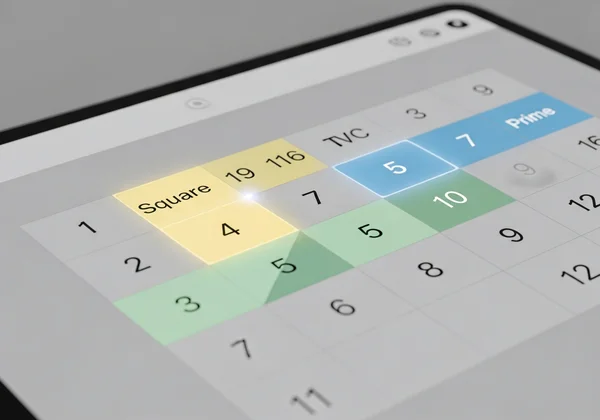
Quick learners often thrive on challenges and enjoy discovering patterns on their own. Instead of just memorizing facts, they benefit from activities that encourage deeper mathematical thinking. A static chart can feel limiting, but an interactive one opens up a world of exploration.
Encourage them to use our color-coding feature to find and mark patterns like square numbers (1, 4, 9, 16…), prime numbers, or multiples of 11. Ask them to predict what the 13s or 15s times tables would look like. This turns memorization into a game of discovery, keeping them engaged and fostering a genuine love for math. They can explore these patterns right now on our interactive grid.
Building Confidence with Struggling Students
For students who find multiplication challenging, the goal is to build confidence through small, manageable steps. Overwhelming them with a full 12x12 grid can cause math anxiety. It's far more effective to start with simpler, foundational concepts.
Begin by focusing on just the 0s, 1s, 2s, 5s, and 10s tables. These are often the easiest to learn and provide a strong base. Use the interactive chart to highlight these rows and columns, allowing the child to see their progress clearly. Celebrate each small victory. As they master these tables, they will gain the confidence needed to tackle more difficult ones like the 7s and 8s.
Using Color Features to Isolate Learning Challenges
One of the most powerful features of a modern learning tool is the ability to visually isolate information. Our brains are wired to notice colors and patterns, and this can be a huge advantage when learning multiplication. A splash of color can transform a confusing grid of numbers into a clear, understandable map.
Instead of seeing a hundred random facts to memorize, students can use color to group related problems, highlight difficult ones, or track their progress. This simple feature, available on our online multiplication tool, empowers learners to take control of their studies and focus on what matters most to them.
Highlighting Tricky Multiplication Facts
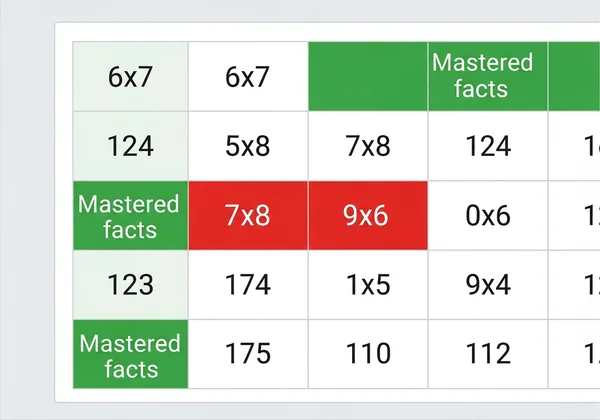
Every student has "tricky" facts they struggle with—for many, these are numbers like 6x7, 7x8, or 9x6. These common hurdles can become major roadblocks if not addressed. Using a highlighting tool is an excellent way to confront them directly.
Have your child or student use a specific color, like red, to mark the multiplication facts they find most difficult. This simple act does two things: it acknowledges the challenge without judgment and creates a visual "to-do" list. Each time they practice, they can focus on the red squares. When they finally master a fact, they can change its color to green—a satisfying and visual representation of their progress.
Creating Custom Learning Pathways
Learning is not a race; it's a journey with a unique path for everyone. A customizable multiplication chart allows you to create personalized learning pathways that fit a student's specific needs. This tailored approach is far more effective than forcing every child to follow the same rigid curriculum.
For example, a student might master the 2s, 4s, and 8s tables together, as they are all related by doubling. You can use colors to group these "number families." Another student might benefit from learning the square numbers first to create "anchor points" on the chart. With a flexible tool, you can create a unique lesson plan that builds on a child's strengths and supports their weaknesses, making the entire process feel more intuitive and less intimidating.
Printable Resources for Diverse Learning Environments
While online tools are fantastic for interactive learning, there is still immense value in physical, hands-on practice. Combining digital and offline resources creates a well-rounded learning experience that caters to different situations, from a focused classroom activity to homework at the kitchen table.
Printable multiplication charts bridge this gap perfectly. They allow for screen-free practice, which is essential for reinforcing memory and developing handwriting skills. They also provide a consistent tool that can be used anywhere, anytime. Our platform offers easy-to-download printable charts to support this blended learning approach, giving you the best of both worlds.
Blank Charts for Progressive Mastery
A blank multiplication chart is one of the most effective tools for assessing and reinforcing knowledge. Instead of just reading the answers, students must actively recall them from memory. This process, known as active recall, is scientifically proven to strengthen long-term memory.
Start by asking the student to fill in only the tables they know, like the 1s, 2s, and 10s. Over time, as they learn new tables, they can add more to their blank chart. This method provides a clear and rewarding visualization of their progress. Filling in the entire grid becomes a final, triumphant goal, demonstrating their complete mastery of the times tables.
Extended Charts for Advanced Learners
What happens once a student has mastered the standard 12x12 chart? For advanced learners, the journey doesn't have to end there. Pushing the boundaries of the chart can keep them challenged and curious about the beautiful logic of mathematics.
You can introduce them to extended charts, such as a 15x15 or even a 20x20 grid. This encourages them to apply the patterns they've learned to larger numbers. It shifts their thinking from pure memorization to understanding the underlying rules of multiplication. Exploring these larger charts helps build a stronger number sense and prepares them for more complex mathematical concepts they will encounter later, like algebra.
No Two Learning Journeys Are Alike—And That's Okay
As parents and teachers, we’ve learned that every child learns differently. By embracing this fact and using tools that adapt, we can transform math from a source of anxiety into an adventure of discovery. Whether a child is a quick learner seeking a challenge or a struggling student needing a confidence boost, the right approach makes all the difference.
What makes our interactive multiplication chart special isn't just the numbers—it's how it adapts to YOUR child's needs, turning frustrating memorization into exciting discovery. It allows you to highlight challenges, explore patterns, and track progress in a visual and engaging way. Paired with printable resources for offline practice, it creates a comprehensive system for mastering multiplication.
Are you ready to create a learning experience tailored to your child's unique pace? Visit MultiplicationChart.cc today to explore our interactive tools, use our fun color features, and download free printable charts.
Frequently Asked Questions About Adaptive Multiplication Learning
What are the most common challenges children face when learning multiplication?
Many children struggle with memorizing facts that don't follow an easy pattern, such as the 6s, 7s, and 8s tables. Others may feel overwhelmed by the sheer number of facts to learn. Using visual tools like the interactive chart at MultiplicationChart.cc helps break down the task into smaller, more manageable parts.
How can I tell if my child needs additional support with multiplication?
Look for signs of "math anxiety," such as frustration, avoidance of math homework, or saying "I'm bad at math." They may also consistently make errors on the same multiplication facts. If you notice this, it's a good time to introduce a more supportive and less stressful tool that allows them to learn at their own pace.
At what age should children start learning multiplication tables?
Most school curricula introduce multiplication around second or third grade, typically between the ages of 7 and 9. However, the most important factor is readiness. A child should have a solid understanding of addition before moving on to multiplication, as multiplication is essentially repeated addition.
How can advanced learners be challenged once they master basic multiplication?
Once they've mastered the 12x12 grid, challenge them with extended charts (e.g., 20x20), have them explore the multiplication of fractions or decimals, or ask them to find complex patterns within the chart. Our interactive tool is perfect for this kind of self-directed exploration.
What role does visual learning play in understanding multiplication concepts?
Visual learning is crucial because it helps make abstract concepts concrete. A multiplication chart visually organizes numbers, allowing students to see relationships and patterns they might miss otherwise. Features like color-coding can highlight concepts like the commutative property (e.g., 3x4 = 4x3) and make the entire structure of multiplication much easier to understand.